Towards a Comprehensive Typo-Morphological Exploration of Silifke (Mersin, Turkey)’s Multi-Layered Urban Form: Methodological Insights within the Context of Urban Morphology
DOI:
https://doi.org/10.15320/ICONARP.2026.363Keywords:
Urban form, Urban history, Urban morphology, Urban transformation, Silifke-Mersin-TurkeyAbstract
Many Anatolian towns with historically layered urban fabrics have undergone rapid spatial transformations in recent decades, often resulting in the loss of traditional morphology and the weakening of collective urban memory. This study focuses on Silifke (ancient Seleuceia ad Calycadnum), a mid-sized Anatolian town with a rich historical background, and examines the planning and morphological changes in its historic core within the broader context of cultural heritage conservation and urban policy. The analysis covers an approximately 150-hectare area that encompasses Silifke’s multi-layered historical center and archaeological protection zones, as defined in the 1995 conservation plan. The research employs a typo-morphological approach grounded in multi-layered mapping techniques and historical data. Its originality lies in developing a context-specific morphological framework for medium-sized Anatolian towns, a category that remains underrepresented in urban morphology literature. A key methodological contribution is the introduction of an “x-ray” analysis—superimposing chronological urban layers produced from archival maps, cadastral records, aerial photographs, historical engravings, and municipal plans. This method reveals the evolution of spatial elements such as street networks, building patterns, and plot configurations across different historical periods. Findings indicate that Silifke’s historic core retained strong spatial continuity until the mid-20th century. However, post-1950 rural-to-urban migration led to increased building activity; during the 1960s, parceling practices began to alter the traditional plot structure; and from the 1980s onward, the rise of high-rise construction further disrupted the historical urban fabric. Notably, the absence of a conservation-oriented development plan until 1995 allowed these transformations to unfold without a regulatory heritage framework. These cumulative changes constitute key turning points in the town’s morphological evolution. Overall, the study underscores the importance of integrating morphological analysis into heritage-sensitive urban planning and proposes a transferable analytical model for other Anatolian towns facing similar developmental pressures.
Metrics
References
Aktüre, S. (1997). Bronze Age cities in Anatolia. İstanbul: History Foundation Yurt Publications.
Akyürek Algın, M., & Hoşkara, Ş. (2024). Transformation of Silifke—a historic town in Anatolia in the Ottoman Period. Buildings, 14(1412), 8. https://doi.org/10.3390/buildings14051412.
Arefi, M., & Aelbrecht, P. (2024). Urban morphology: Urban design nexus revisited. URBAN DESIGN International, 29, 135–136. https://doi.org/10.1057/s41289-024-00259-y.
Arefi, M., & Aelbrecht, P. (2024). Urban design and morphology: Reconnecting people and place. Routledge.
Aykaç, R. (2018). Silifke kalesinin kazıları sonucunda ortaya çıkan yerleşim dokusu (Yayımlanmamış doktora tezi). T.C. Selçuk Üniversitesi Sosyal Bilimler Enstitüsü, Sanat Tarihi Anabilim Dalı. https://tez.yok.gov.tr/UlusalTezMerkezi/tezSorguSonucYeni.jsp.
Aykın, E. (2011). Çizgilerle Tarsus’tan Anamur’a. Ankara: T.C. Ministry of Culture Publications.
Ayten, S. S., & Aygen, Z. (2022). Kentsel bir fragman olarak kapalı konut yerleşmeleri: Kayseri örneği. Kent Akademisi, 15(1), 123–144. https://doi.org/10.35674/kent.1128990.
Bandarin, F., & van Oers, R. (2012). The historic urban landscape: Managing heritage in an urban century. Wiley-Blackwell.
Bilsel, C. (2015). Urban morphology as a spatiological approach in urban history research. In Y. Baş (Ed.), Türkiye Urban Morphology Symposium: Basic Approaches and Techniques – Proceedings Book (pp. 59–77). Mersin University Publications.
Caniggia, G., & Maffei, G. L. (2001). Interpreting basic building: Architectural composition and building typology. Alinea Editrice.
Cataldi, G., Maffei, G. L., & Vaccaro, P. (1997). The typo-morphological approach of G. Caniggia and his school of thought. Urban Morphology, 1(1), 52–56.
Cataldi, G., Maffei, G. L., & Vaccaro, P. (1997). Saverio Muratori and the Italian school of planning typology. Urban Morphology, 1, 49–50.
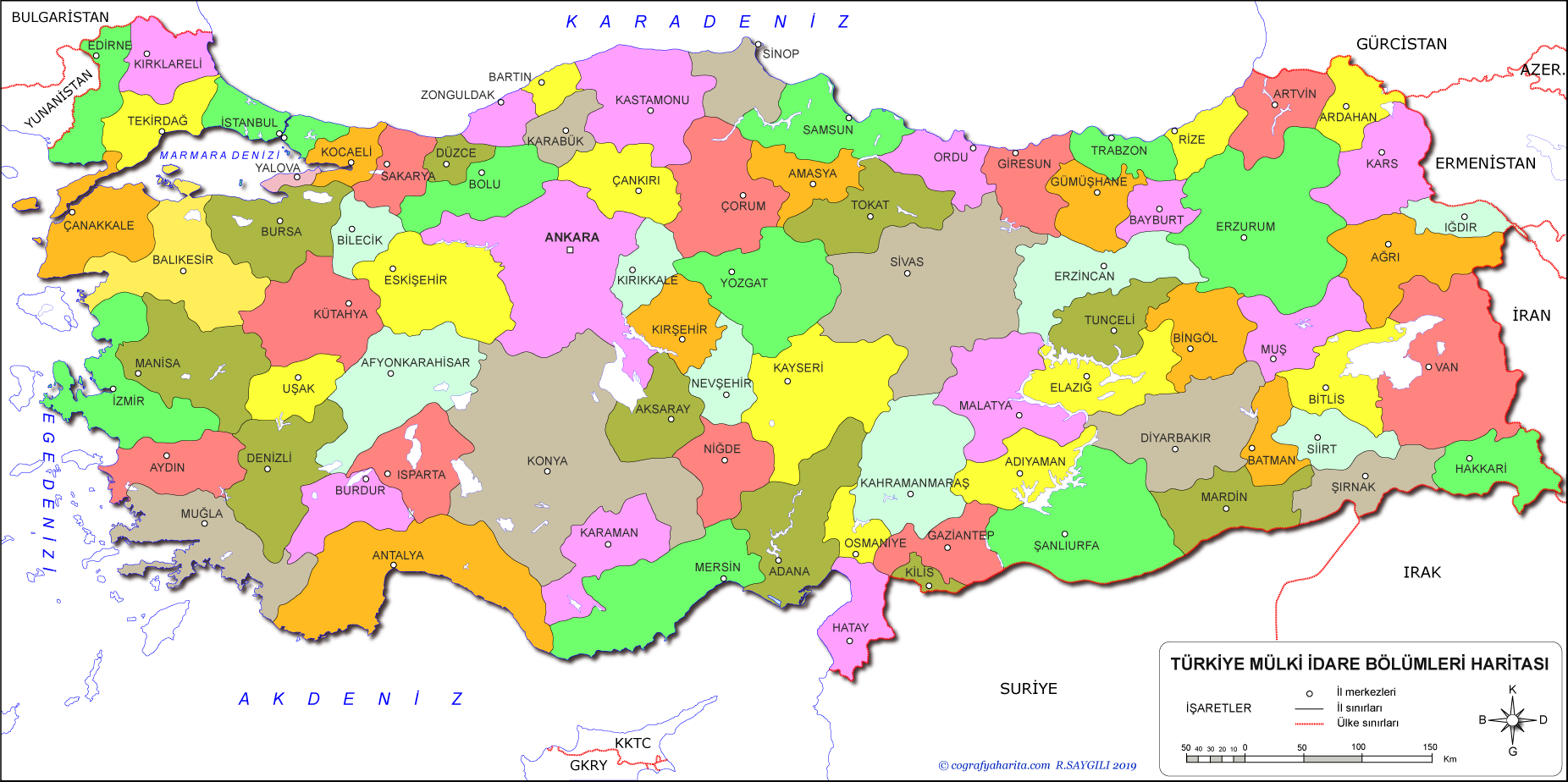
Coğrafya Harita. (2022, March 25). Türkiye mülki idare sistemleri haritası. http://cografyaharita.com/haritalarim/4lturkiye-mulki-idare-sistemleri-haritasi1.png.
Conzen, M. R. G. (1968). The use of town plans in the study of urban history. In H. J. Dyos (Ed.), The study of urban history (pp. 113–130). Edward Arnold.
Conzen, M. R. G. (1981). The urban landscape: Historical development and management. Academic Press.
Conzen, M. P. (2004). Thinking about urban form. Peter Lang.
Cömert, N. Z., & Hoşkara, Ş. (2013). A typo-morphological study: The CMC mass housing district Lefke, Northern Cyprus. Open House International, 38(2), 16–30.
Cömert, N. Z. (2013). Testing an integrated methodology for urban typo-morphological analysis on Famagusta and Ludlow (PhD dissertation). Eastern Mediterranean University, Cyprus.
Dağlı, Y., Kahraman, S. A., & Dankoff, R. (2005). Evliyâ Çelebi Seyahatnamesi: Anadolu, Suriye, Hicaz (1671–1672) (Vol. 9). İstanbul Devlet Matbaası. (Orijinal eser 1935’te yayımlandı), 161.
García, M., & Pérez, L. (2022). Advances in urban morphology: Integrating spatial technologies for heritage cities. Journal of Urban Planning and Development, 148(3), 04022025. https://doi.org/10.1061/(ASCE)UP.1943-5444.0000689.
Google Maps. (1969). Ankara Air Force Command Archive.
Gürtürk, S. (1987). Silifke tarihi. Can Matbaası.
Hall, P. (2014). Cities of tomorrow: An intellectual history of urban planning and design in the twentieth century (4th ed.). Hoboken, NJ: Wiley-Blackwell.
Harvey, D. (2006). Paris, capital of modernity (1th ed.). Routledge.
İnceoğlu, M. (2013). Silifke yaşam kültürü. Tebeşir Yayınları.
Jordan, D. P. (1996). Transforming Paris: The life and labors of Baron Haussmann. University Of Chicago Press.
Karaarslan, E., & Çelikyay, S. (2019). Analysis of the historical urban texture of Yeşilyurt (Malatya). Bartın University International Journal of Natural and Applied Sciences (JONAS), 2(2), 261–273.
Kaya, A. Y. (2019). Çorum urban morphology (PhD dissertation). T.C. Fırat University, Elazığ.
Keil, J., & Wilhelm, A. (1931). Monumenta Asiae Minoris antiqua (Vol. III, pp. 6–8). Manchester University Press.
Kropf, K. (2018). The handbook of urban morphology. John Wiley & Sons.
Kubat, A. S., & Topçu, M. (2009). Morphological comparison of Antakya and Konya historical urban textures. International Journal of Human Sciences, 6(2), 336.
Levy, A. (1997). The typo-morphological approach of G. Caniggia and his school of thought. Urban Morphology, 1, 52–56.
Li, X., Zhang, Y., & Wu, J. (2023). GIS and big data applications in urban morphology: Mapping the evolution of historic city centers. Cities, 134, 104054. https://doi.org/10.1016/j.cities.2023.104054.
Manav, A., & Gediz Urak, Z. (2024). Traditional architecture in the central-northern Mediterranean region: Tectonics and typological analysis of traditional Mut houses. ICONARP International Journal of Architecture and Planning, 12(2), 606–637. https://doi.org/10.15320/iconarp.2024.284.
Mansel, A. M. (1943). Silifke Rehberi. Maarif Press. (Ministry of Education, Antiquities and Museums Directorate)
Marshall, S. (2005). Urban pattern specification. Institute of Community Studies.
Martins, F., & Silva, T. (2024). 3D modeling in urban morphological studies: A case for sustainable planning. Environment and Planning B: Urban Analytics and City Science, 51(1), 122–140. https://doi.org/10.1177/23998083231123456.
Moudon, A. V. (1997). Urban morphology as an emerging interdisciplinary field. Urban Morphology, 3–8.
Mumford, L. (1961). The city in history: Its origins, its transformations, and its prospects. Harcourt, Brace & World.
Oliveira, V. (2016). Urban morphology: An introduction to the study of the physical form of cities. Springer.
Oliveira, V. (2019). Urban form and design. Routledge.
Oliveira, V. (2021). Morphological research in planning practice. Springer.
Panerai, P., Castex, J., & Depaule, J.-C. (2004). Urban forms: The death and life of the urban block. Architectural Press.
Panerai, P. (1970). Castex Jean, Notes sur la structure de l’espace urbain. In Selçuk Batur için mimarlık yazıları (pp. 30–33). Mimarlar Odası Ankara Şubesi.
Rahman, M., & Chen, Y. (2025). Community engagement and socio-environmental factors in urban morphology: Toward participatory spatial planning. Urban Studies, 62(4), 789–807. https://doi.org/10.1177/00420980231156789.
Rodger, R., & Rau, S. (2020). Thinking spatially: New horizons for urban history. Urban History, 47, 372–383.
Rodger, D., & Rau, H. (2020). Reframing the city: From urban metabolism to political ecologies of food distribution. Anthropological Theory, 20(4), 419–438.
Serin, R. (2002). Analysis of the conservation problems of traditional Silifke houses and conservation and development proposal for Taşucu Street (Master’s thesis). Gazi University, Ankara.
Sevim, A. (2019). Cilicia travelers and İçel traveler notes (Vol. 1, pp. 11–16). Cinius Press.
Silifke Municipality. (1975). Silifke Municipality current map of 1975 and 2022.
Silifke Municipality. (1988). Silifke Municipality current map of 1988 and 2022.
Silifke Municipality. (2023). Silifke Municipality current map.
Silva, A., & Gomes, R. (2023). Beyond form: Incorporating socio-environmental perspectives in urban morphological research. Journal of Urban Affairs, 45(2), 321–338. https://doi.org/10.1080/07352166.2022.2145678.
Siyavuş, A. E., & Belge, R. (2024). Urban sprawl in Thrace: Case of Çorlu. Planlama, 34(1), 10–21. https://doi.org/10.14744/planlama.2024.04557.
Steadman, P., Evans, S. H., & Batty, M. (2009). Wall area, volume and plan depth in the building stock. Building Research & Information, 37(5–6), 455–467.
Taşkıran, C. (2009). Silifke Great City (pp. 3–76). SİM Matbaacılık Ltd. Şti.
Tezer, S. T. (2021). A proposal for a methodological framework for settlement history analysis: Possibilities offered by urban morphology and historical geography. Tasarım Kuram, 17(32), 70–89.
Topal, A. K. (2014). What is a city conceptually and where is the city in Turkey? Dokuz Eylül University Social Sciences Institute Journal, 6(1), 276–294.
Uçar, A. (2009). Silifke in the 19th century according to Temettuat Books. İstanbul Silifke Culture and Solidarity Association.
Ünlü, T., & Baş, Y. (2017). Morphological processes and the making of residential forms: Morphogenetic types in Turkish cities. Urban Morphology, 21(2), 105–122.
Ünlü, T. (2018). Mekânın biçimlendirilmesi ve kentsel morfoloji. In Türkiye Kentsel Morfoloji Ağı (TNUM) II. Sempozyum Bildirileri.
Ünlü, T. (2019). Managing the urban change: A morphological perspective for planning. ICONARP International Journal of Architecture and Planning, 7(2), 435–456.
Ünlü, T., & Durmuşoğlu, C. (2022). Adana’da konut alanlarının döngüsel gelişimi: Oluşum, birikim ve dönüşüm dönemleri. In TNUM III. Sempozyumu Bildirileri.
Yalçın, A. (2021). Socio-economic and urban development in Silifke (From the 16th century to the 19th century). Karamanoğlu Mehmetbey University Journal of Literature Faculty, 4(1), 146–164.
Yalçın, A. (2004). Geç devir Osmanlı Silifkesi (1860–1904) (Vol. 5, p. 7). Taşeli Ofset, Silifke.
Yapıcı, K., Görgün, T., Özbudun, S., Duran, M., Özbolat, N. K., Hünler, K., Demirer, T., Doğmuş, O. E., Orhangazi, Ö., & Demirer, G. (1999). Environment and city in the grip of the YYD. Ütopya Press.
https://www.sitso.org.tr/tr/silifke-kulturu, accessed date: 26.10.2025
Downloads
Published
How to Cite
Issue
Section
License
Copyright (c) 2026 ICONARP International Journal of Architecture and Planning

This work is licensed under a Creative Commons Attribution-NonCommercial-NoDerivatives 4.0 International License.
COPYRIGHT POLICY
1. The International Journal of Architecture and Planning (ICONARP) open access articles are licensed under a Creative Commons Attribution-NonCommercial-NoDeriatives 4.0 International (CC BY-NC-ND 4.0). This license lets the author to share (copy and redistribute) his/her article in any medium or format.
2. ICONARP cannot revoke these freedoms as long as you follow the license terms. Under the following terms:
The author must give appropriate credit, provide a link to ICONARP, and indicate if changes were made on the article. The author may do so in any reasonable manner, but not in any way that suggests the ICONARP endorses the author or his/her use.
The author may not use the article for commercial purposes.
If the author remix, transform, or build upon the article, s/he may not distribute the modified material.
The author may share print or electronic copies of the Article with colleagues.
The author may use the Article within his/her employer’s institution or company for educational or research purposes, including use in course packs.
3. The author authorizes the International Journal of Architecture and Planning (ICONARP) to exclusively publish online his/her Article, and to post his/her biography at the end of the article, and to use the articles.
4. The author agrees to the International Journal of Architecture and Planning (ICONARP) using any images from the Article on the cover of the Journal, and in any marketing material.
5. As the author, copyright in the Article remains in his/her name.
6. All papers should be submitted electronically. All submitted manuscripts must be original work that is not under submission at another journal or under consideration for publication in another form, such as a monograph or chapter of a book. Authors of submitted papers are obligated not to submit their paper for publication elsewhere until an editorial decision is rendered on their submission. Further, authors of accepted papers are prohibited from publishing the results in other publications that appear before the paper is published in the Journal.










 ICONARP International Journal of Architecture and Planning is an OAJ supported by